How do I build links for a wellness studio: reviews and citations first?
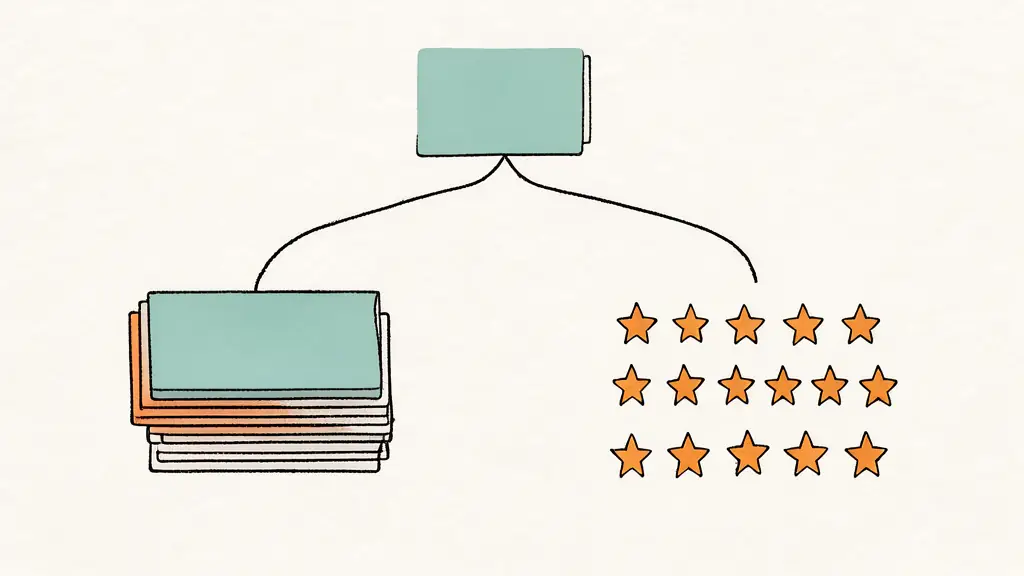
Follow the branches in order. Stop at the first one that applies, fix it, then come back.
NoraSEO editorial team ·
The tree, one question at a time
01
Does your Business Profile exist, and is it yours?
If no, claim it and finish the hours, category and services before anything else. Links to an unverified business do very little.
02
Do your name, address and phone match everywhere?
If no, fix the website footer, Facebook, Instagram bio and any directory. One spelling, one phone number.
03
Do you have fewer than ten honest reviews?
If yes, ask after every appointment for two weeks. Never offer a discount for a five-star rating, which Google's policies prohibit.
04
Does every treatment have its own page?
If no, write one before ordering links. A link needs somewhere sensible to land.
05
Have you answered yes to all of that?
Then links are the next job. Pick two or three relevant sites and send them to one page.
What each branch is really for
Reviews help people choose you once they see you. Citations help maps and apps agree on who you are. Links help search engines decide whether your site deserves to be shown. Three jobs, three tools.
That order is not a law, only a sensible default. A studio in a quiet town may need links sooner than one on a high street with ten rivals.
When you reach the link branch, use the step-by-step order guide and keep the first order small. A pace chart sits in our week-by-week timeline. Pace yourself. One fix a week is a fine rhythm for a team that also has clients to see, and it leaves room to notice what actually changed.
A worked example, clearly invented. A massage studio in a small town has 4 reviews, a profile with the wrong closing time and no page for deep-tissue sessions. The sensible spend of the first month is $0: fix the hours, write the page, send 20 review requests, and only then put $15 to $30 into links.
Google's own guidance for local results names relevance, distance and prominence. Prominence includes links, reviews and how well known you are, which is why we keep links in the picture without putting them first.
Skip anything that sounds too clever. Most local wins in this field are dull ones, such as a correct phone number.
Things you can safely ignore at first
Noise
Why it can wait
Domain Rating of your own site
A third-party score; it does not decide your local rank
Hundreds of directory listings
A dozen accurate ones do the job
Social media shares counted as links
Most are nofollow and do not carry over
Daily rank checkers
Local results shift by location and device
A local link is a relationship, not a purchase
So how do I build links for a studio without buying a pile of them? Start with people. Specifically, the ones who already know your name. A local link is usually a relationship that happens to appear on a web page.
That framing changes the work. You are looking for a partner, not a vendor, and the best partners already serve the same clients you do.
Think about the calendar too. A partner who runs a launch night, a seasonal promotion or a community event gives you a natural reason to be mentioned, and that reason is what makes the mention feel earned.
Chambers and community groups
A local chamber, a parents' association or a community centre may list its members on its website. Ask to be included, and offer a plain description of what you do.
Keep that description accurate and identical to your listing elsewhere. Consistency helps the directory and the maps agree.
Some groups ask for a logo or a short blurb. Keep a version of each one ready, so you can respond in one sitting rather than a month later.
Partners who serve the same clients
A physio clinic, a nail bar, a florist or a photographer may share your clients. A referral arrangement can produce a mention and a link when both sites describe the partnership honestly.
Offer something real in return, such as a clear referral note or a useful short piece for their site. Skip any arrangement you would not describe to a client.
Local press, events and sponsorships
A local paper or a neighbourhood blog may cover an opening, a charity day or a class series. Sponsoring a local team or event often brings a listing on its sponsor page.
These are slow to arrange, and that is part of their value. The links they bring tend to come with real local readers.
Prepare a short, honest story about the studio before you call anyone. Include who runs it, what it offers and why the opening matters locally. Clear pitches are much easier for an editor to act on.
Quick answers
Can I just build links with directories?
Directories give you citations, which are useful for consistency. They rarely carry much weight as links. Use them to make your details uniform, then look at relevant blogs, local news and partner sites for editorial mentions.
Should I buy links before I have reviews?
We would not. Reviews convert the visitors you already have, and they feed the map ranking. Links can wait two or three weeks while you collect them.
Is one link enough?
One relevant link from a real site beats ten careless ones. Whether it is enough to change anything depends on your competitors, so measure for six to eight weeks before ordering more.
How many links a small studio actually needs
There is no fixed count, and anyone who gives you one is guessing. A small studio usually needs a handful of relevant links, placed where local people would actually find them.
The better question is whether each link would make sense to a client who spotted it. If it would not, the link is probably in the wrong place.
Write the list in a plain document, with the page each link should reach beside it. A list a receptionist could read is a list you can check.
Why a dozen good links beat a hundred weak ones
A link from a site that serves your area carries more meaning than a crowd of links from unrelated pages. One careful placement is also easier to explain than a heap of them.
Quality keeps the risk low, too. A list built on relevance looks natural, and it is easier to explain to a client who asks where the links came from.
Watch the competitors, not the scoreboard
Look at where two or three local competitors are linked from. Their directories, partners and events show the places a local buyer already trusts.
Copy the sources that fit your business. Skip the ones that only make sense for a different town or a different trade.
How to tell whether the list is enough
Count your links once a month, and ask whether each new one came from a site you would be happy to show a client.
If the answer is yes every time, the list is on track. If not, pause and sort the list before you add anything else.
Mistakes that cost studios time
Most wasted effort in this area comes from the same few habits. Each one feels productive while it happens, which is why they keep coming back.
The fixes are dull on purpose. Dull is usually what works for a local business.
Buying a bundle before the profile is clean
A bundle of links to a profile with the wrong hours sends people to the wrong information. Fix the profile first, then decide whether any link is needed.
If a seller pushes you to start this week, ask what the profile fixes look like in their plan. A good answer names the fixes, not just the link count.
Opening a second listing for the same studio
Two listings for one studio confuse maps and directories. Pick the one you own, claim it and link to it.
Duplicates usually come from an old account or a rebrand. Find them, then close or merge them rather than adding a third.
Keep a note of the old listing's address and the account it belonged to before you close it. Nobody should have to rebuild that history from memory.
Judging the work after two weeks
Links take time to appear and longer to matter. Two weeks is too short to read a result, and most local changes need a longer view.
Use the same review rhythm as the rest of the plan. Resist the urge to change everything at once.
Copying a competitor's whole list
A rival's list of links shows where they are, not why they are there. Some of those places may be old, closed or a poor match for your studio.
Borrow the two or three sources that clearly fit you, and leave the rest of the list where it is.